
Excavator screening bucket: one machine with multiple functions breaks the construction dilemma, adapts to all scenarios, and operates efficiently
Time:
Feb 27,2026
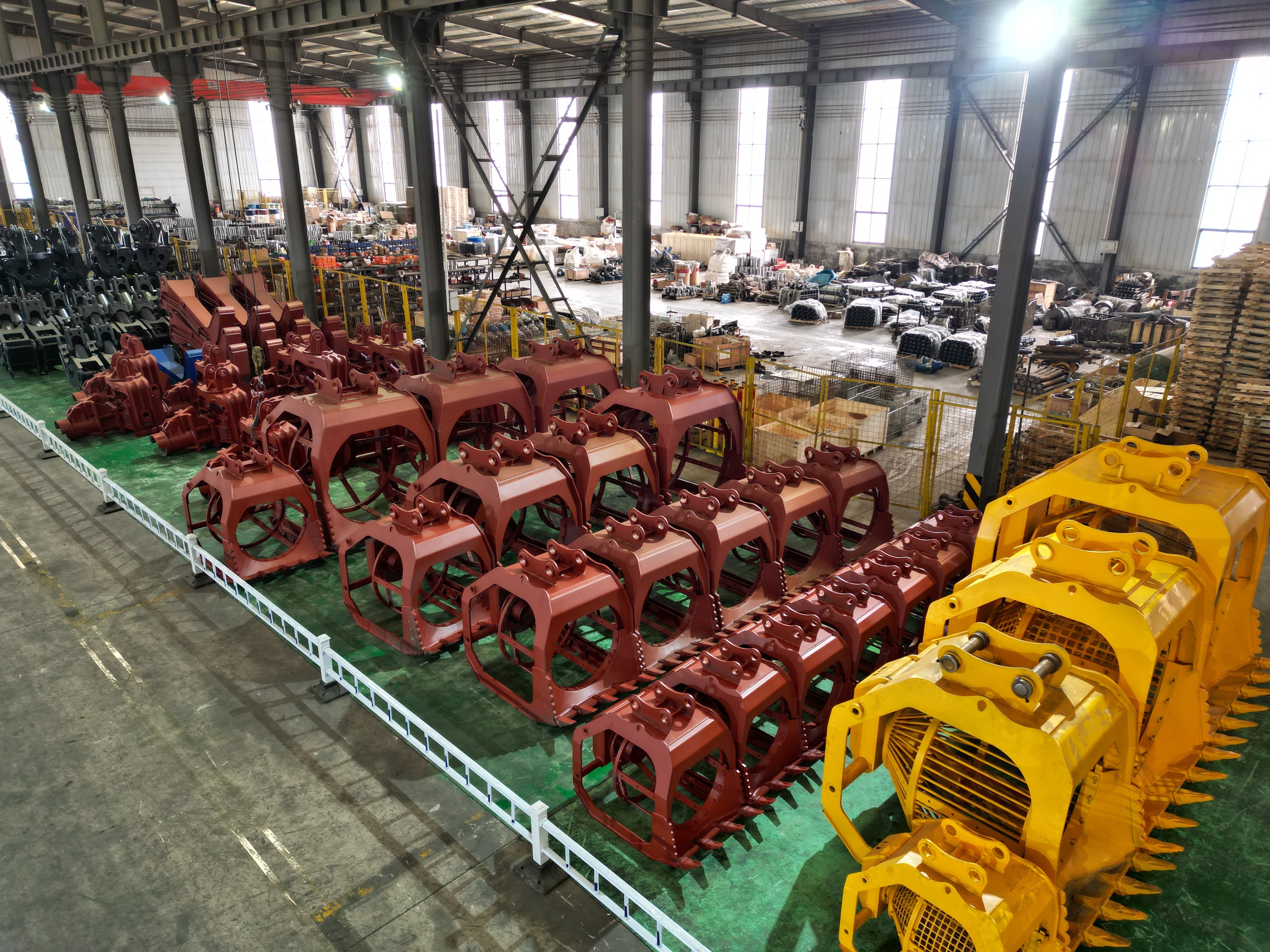
In engineering construction, material screening is a high-frequency and crucial process. Traditional screening methods require the use of multiple pieces of equipment and consume a significant amount of manpower for transportation, resulting in low efficiency and increased construction costs. As a "multi-functional attachment" of the excavator, the excavator screening bucket operates without requiring an additional power source, relying solely on the hydraulic system of the excavator itself. It integrates excavation, screening, classification, and recycling functions, completely breaking through traditional construction bottlenecks and becoming a "powerful assistant" for efficient construction in modern engineering. It is widely used in various working conditions, balancing practicality and economy.
Core Advantages: Six Highlights to Unlock New Efficiency in Construction. First, one machine with multiple functions, saving labor and equipment. There is no need to additionally equip fixed screening machines, conveyors, or other equipment. A single excavator, paired with a screening bucket, can simultaneously complete multiple processes such as excavation, screening, separation, and loading, avoiding frequent equipment changes and multiple material transfers, significantly reducing equipment investment costs and space occupation. Compared to traditional manual screening or multi-equipment collaboration mode, it can shorten processing time by up to 60%, making the construction process more concise and efficient. At the same time, it is compatible with various models of excavators ranging from 6 to 38 tons, with strong versatility, no need for additional modification, and quick switching of operational functions
II. Precise screening to meet diverse needs. The 12-sided sieve basket design, compared to the common circular sieve basket, can vibrate materials more efficiently, speeding up the screening process. It is equipped with a variety of interchangeable sieve baskets with screen sizes ranging from 5mm to 80mm. Some models can be customized with screen sizes from 5mm to 150mm, allowing precise adjustment of the screening granularity according to construction needs, easily achieving different requirements such as sand and gravel grading, soil purification, and waste separation. The built-in automatic screen cleaning mechanism effectively prevents wet materials and viscous materials from blocking the screen, ensuring stable screening efficiency and maintaining excellent performance even when handling wet and mixed materials.
III. Robust and Durable, Suitable for Harsh Working Conditions. The entire machine is made of special high-strength wear-resistant steel, with the screen basket, tooth tips, and internal protection all using wear-resistant materials. It exhibits excellent resistance to wear, impact, and tension, making it suitable for harsh working environments such as mines and demolition sites [superscript:1][superscript:4]. Equipped with a powerful hydraulic motor, it operates smoothly and with low noise through timing belt transmission and optimized torque delivery. Additionally, the use of large main rolling bearings allows for the installation of longer screen baskets, increasing the screen area and further enhancing screening efficiency and equipment lifespan [superscript:1]. The simple structure, convenient maintenance, and high reliability of the entire machine effectively reduce subsequent maintenance costs.
IV. Flexible and Efficient, Reducing Construction Costs. With its compact size and easy mobility, it can operate flexibly in narrow spaces without requiring complex installation procedures. The quick coupling design facilitates the installation and disassembly of the screening bucket and excavator, reducing downtime. There is no need to hire additional labor for sorting; only one excavator driver is required to complete all screening operations, significantly saving labor costs. At the same time, it achieves "using local materials for local screening," reducing material transportation and secondary transportation costs. Especially in scenarios such as pipeline backfilling and site clearance, on-site materials can be directly screened and reused, further reducing construction costs.
V. Dual-purpose for both dry and wet materials, with a wider range of applications. Breaking the limitations of traditional screening equipment on material moisture, it can efficiently screen both dry sand and soil as well as wet silt and construction waste, without experiencing issues such as blockage or incomplete screening. It is suitable for processing a variety of materials, including natural materials (topsoil, clay, peat, etc.), construction waste (concrete residue, milled asphalt, etc.), and soft ores (limestone, coal, etc.), meeting the screening needs of different industries.
VI. Green Environmental Protection, Assisting Resource Recycling In the processing of construction waste and demolition debris, it can efficiently separate concrete blocks, waste bricks, fine soil, and sand and gravel, realizing the recycling and reuse of waste materials, reducing resource waste and landfill volume, and conforming to the concept of green construction. In soil remediation and river dredging scenarios, it can filter out impurities, purify soil and sand and gravel, assisting in ecological environment governance, while reducing dust pollution during construction, balancing efficient operation and environmental protection requirements.
Application Scenario: Covering eight major fields, unlocking the potential of all-scenario operations. 1. Construction and Demolition Recycling is a "must-have tool" for construction and demolition sites. It can screen demolition waste on-site, separating concrete blocks, scrap steel bars, broken bricks, and fine soil. The purified fine soil can be directly used for site backfilling and road cushioning. The separated construction waste can be processed into recycled aggregates, achieving resource recycling. At the same time, it can handle mixed sand and gravel in construction, screening out aggregates that meet construction standards for concrete mixing and wall masonry, improving construction quality.
II. Mining and Quarry Operations During mining and quarry operations, the mined ore can undergo preliminary screening to separate it from soil and debris, quickly filtering out ore that meets specifications and reducing subsequent processing steps. At the same time, mine waste can be processed to separate usable debris for use in mine road paving, reducing the environmental pressure caused by waste accumulation and enhancing the comprehensive benefits of mining. It is compatible with excavators of different tonnages, meeting the diverse needs of large mines and small quarries.
III. Road and Pipeline Construction During road construction, precise screening of subgrade fill materials can be conducted to remove impurities and oversized particles, ensuring uniformity of subgrade fill and enhancing the quality of road construction. Meanwhile, asphalt milling materials can be screened for recycling purposes. In projects such as the laying of natural gas pipelines and cables, excavated soil can be screened to select fine, impurity-free soil for backfilling pipelines and cables, preventing sharp stones from scratching the pipelines and cables. Additionally, there's no need to purchase additional backfill soil, saving construction costs.
IV. River Dredging and Water Conservancy Projects During river and reservoir dredging operations, silt and sand can be separated. The purified sand can be recycled and reused for road construction and landscape projects, while the silt can undergo harmless treatment for soil improvement, achieving the dual benefits of "dredging + resource recovery". At the same time, debris and gravel in rivers and beaches can be cleared, facilitating the maintenance of water conservancy facilities and ecological restoration.
V. Landscaping and Agricultural Planting In landscaping projects, high-quality planting soil can be selected, with stones and weed roots removed. The purified soil is used for seedling planting and lawn laying, enhancing the survival rate of greening. In the agricultural sector, it can be used for soil improvement, compost screening, separating impurities from compost, and producing high-quality organic fertilizer. At the same time, stones in farmland can be screened to improve soil texture and aid crop growth.
VI. Garbage Disposal and Resource Recycling In garbage disposal plants and landfills, domestic and industrial waste can be sorted to separate recyclable resources such as plastic, wood, and metal. At the same time, soil and fine materials in the waste can be separated to reduce the amount of waste landfilled and improve resource recycling utilization. It can handle long-term accumulated waste materials, replacing large crushers and reducing waste disposal costs.

VII. Soil Remediation and Environmental Governance In soil pollution remediation and site remediation projects, contaminated soil can be screened to separate pollutants and impurities from the soil, purify the soil, and lay the foundation for subsequent soil improvement and vegetation restoration [superscript:3][superscript:8]. At the same time, waste materials from contaminated sites can be processed for classified recycling, reducing environmental pollution and contributing to green ecological construction.
VIII. Sand Processing and Building Materials Processing In sand processing operations, river sand and sea sand can be screened to remove impurities and clay lumps from the sand and gravel, and graded into different specifications of sand to meet various needs such as construction sand and decorative sand. In building material factories and lime-sand brick factories, blocky materials such as coal slag and water slag, as well as powdered materials, can be screened to improve the quality of building material processing and achieve waste recycling.
The excavator screening bucket, with its core advantages of "multi-functionality, precision and efficiency, durability, and environmental friendliness," breaks the limitations of traditional screening modes. It requires no additional power or complex operations, adapts to various working conditions and materials, and can significantly enhance construction efficiency, reduce construction costs, and achieve resource regeneration and environmentally friendly construction. It is a "high-efficiency tool" in multiple fields such as construction, mining, water conservancy, and environmental protection.
Whether it's fine screening in small-scale sites or large-scale operations in large projects, the excavator screening bucket can perfectly adapt, helping construction companies reduce costs, increase efficiency, and achieve green construction, unlocking new value in engineering operations!

RELATED NEWS

undefined

Phone:
+86 13225341757
E-Mail:
Address:
Miao Town Industrial Park, Jingxian County, Hengshui City, Hebei Province